

Chevy Traverse vs GMC Acadia – What is the Best Used SUV to Buy?
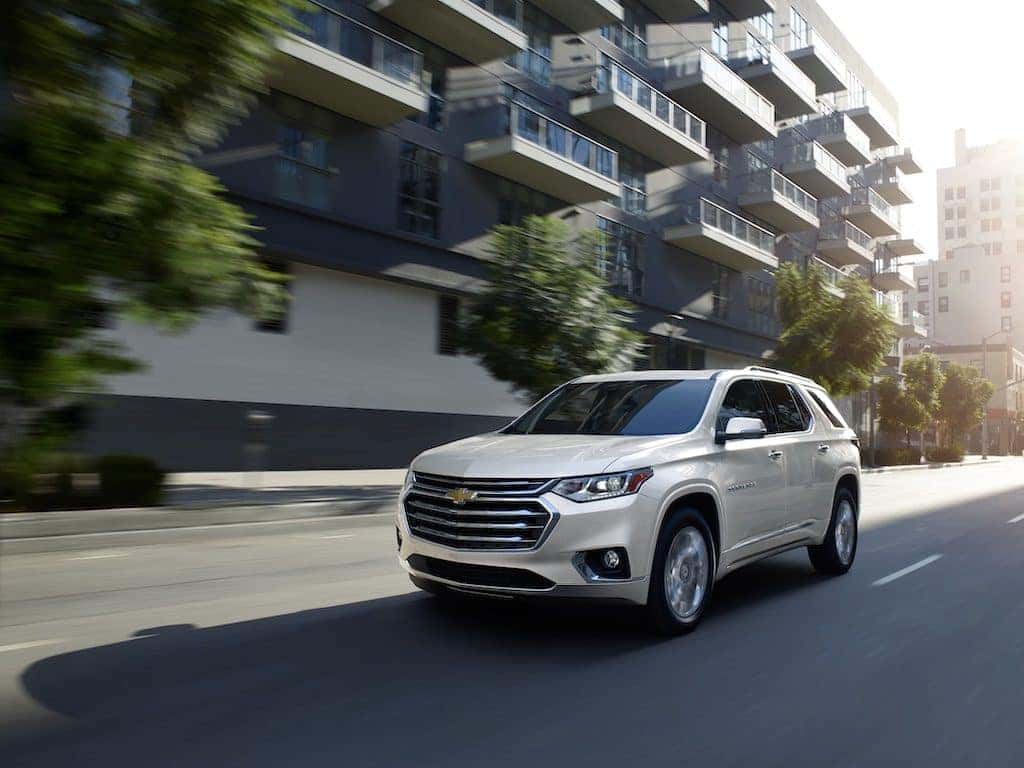
Chevy Traverse
The Chevrolet Traverse and the GMC Acadia SUVs are both made by General Motors. They have many of the same features, but there are some important differences. The Traverse comes in L, LS, LT, RS, Premier, and High Country trim levels. With the Acadia, you can choose SL, SLE, SLT, AT4, or Denali trims. Here’s some more information about the characteristics of these appealing vehicles.
Exterior
The Chevy Traverse has a boxier look than the GMC Acadia, narrower headlights, and a rectangular grille. It comes with 18-inch wheels, automatic high beams, and a rear windshield wiper. There’s a 120.9-inch wheelbase for the 2020 model, and it’s 204.3 inches long with 8 inches of ground clearance.
You can add assist steps, roof rails, 20-inch wheels, a cargo cover, a cargo net, a hands-free programmable power liftgate, tinted windows, a dual-panel power sunroof, fog lights, and splash guards. Additional options include heated power auto-dimming side mirrors with turn signals, a keypad for keyless entry,
The Acadia looks more muscular, sleek, and refined. It has 17-inch wheels, and 18- or 20-inch wheels are available. Most other exterior options are the same, and you can even choose the same sunroof for the Acadia as for the Traverse. With a 112.5-inch wheelbase, a 193.4-inch body, and 7.2 inches of ground clearance, it’s more compact than the Traverse. However, there’s still plenty of room.
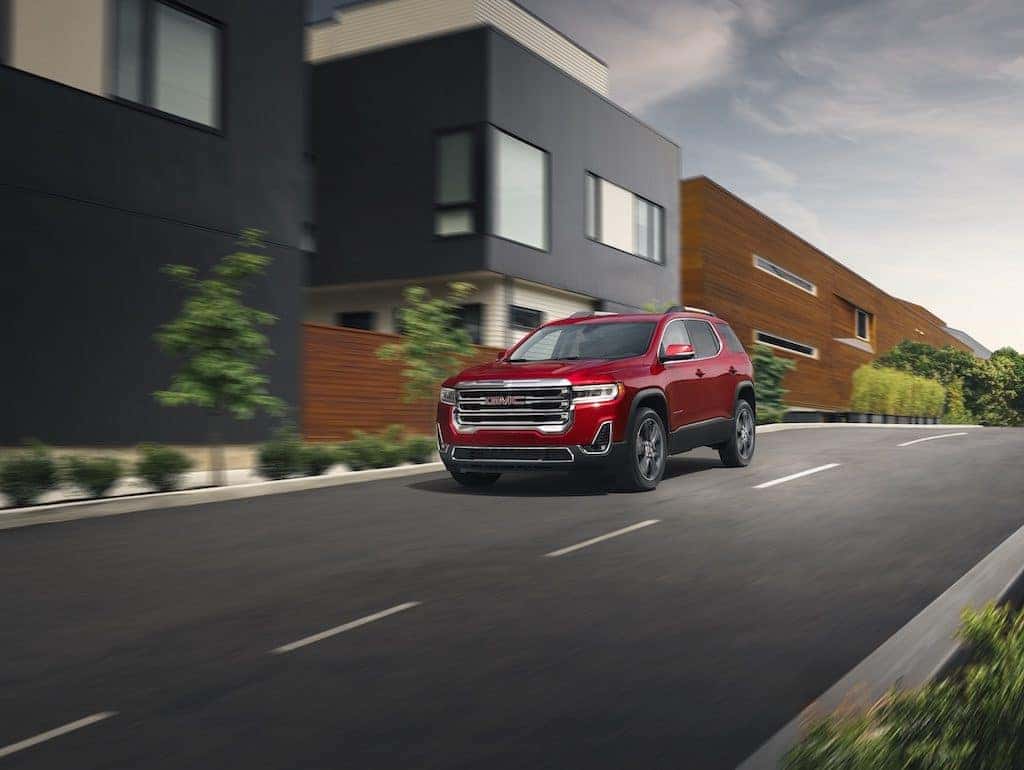
GMC Acadia
Interior
The Traverse and the Acadia both have spacious, luxurious interiors with three rows. The Traverse’s dashboard has a more angular, utilitarian style, and the Acadia’s dash looks more curvy and modern.
With the Traverse, you’ll get 10 cup holders, a Wi-Fi hotspot, a compass, active noise cancellation, additional storage underneath the rear floor, and a 7-inch touch screen. Other standard features include voice recognition, a humidity sensor, and keyless entry. It also comes with audio, phone, and cruise controls on the steering wheel. With both sets of rear seats folded, you’ll get 98.2 cubic feet of cargo space.
You can choose a 120-volt power outlet, a 4.2-inch driver information center, a six-way power front passenger seat, an eight-way power driver’s seat with memory settings, a heated steering wheel, and a 10-speaker Bose audio system. You can get an 8-inch touch screen, navigation, Apple CarPlay, Android Auto, a collapsible cargo organizer, heated and cooled leather seats, remote start, SiriusXM satellite radio, and power-folding third-row seats as well. The optional entertainment system has a DVD player, two 8-inch screens, two sets of wireless headphones, and a remote.
With the Acadia, you’ll get climate controls and vents for the rear seats, push-button start, three-zone climate control, and 79 cubic feet of cargo space. The optional Bose audio system has eight speakers instead of 10. You can select an auto-dimming rearview mirror, a keypad for keyless entry, wireless charging, and remote start as well. Otherwise, the features are very similar to the ones in the Traverse.
Performance
The Traverse has a 3.6-liter V-6 engine that gives 310 horsepower and 266 pound-feet of torque. It’s connected to a nine-speed automatic transmission, and all-wheel drive is available. You’ll also get an independent suspension, traction control, power steering, and electronic stability control. You can add a heavy-duty engine cooling system, and hitch guidance and hitch view can help you line up the Traverse with a trailer hitch. Tow/haul, off-road, all-wheel-drive, and front-wheel-drive driving modes are available. It can tow up to 5,000 pounds, while the Acadia can pull 1,500 pounds.
With the Acadia, you’ll get a 2.5-liter, four-cylinder engine that generates 193 horsepower and 188 pound-feet of torque. You can also pick a 2.0-liter, turbocharged, four-cylinder engine that provides 230 horsepower and 258 pound-feet of torque. The same 3.6-liter as on the Traverse is optional, but it produces 271 pound-feet of torque instead of 266.
Both vehicles use stop-start technology to shut off the motor when you pause in traffic, preventing idling and saving fuel. The Acadia gets up to 21 mpg in the city and 27 mpg on the highway, and the Traverse can go up to 18 mpg in traffic and 27 mpg on larger roads.
Safety
Both SUVs have excellent safety features to protect drivers and passengers. The Traverse’s Teen Driver system lets you turn on safety and driver assistance systems and limit audio volume and speed for new drivers. You can also get detailed reports about their driving habits.
In the Traverse, you can add automatic emergency braking, forward collision warning, a first aid kit in a convenient storage container with the Chevy logo, and a following distance indicator for the cruise control. Other options include pedestrian detection, a 360-degree camera system, a highway safety kit with jumper cables, lane change alert, side blind zone alert, lane-keeping assistance, and a display for the rear camera where the rearview mirror would usually be. Rear parking assistance and rear cross-traffic alert are available as well.
The bulk of these same safety features also come in the Acadia. But in addition, the Acadia comes with a washer for the rearview camera and a tire fill alert system to let you know when you fill a tire to the correct pressure. You can choose a safety alert seat that pulses instead of beeping when you get lane change alerts and similar notifications.
While the Traverse is more spacious and powerful, the Acadia has some options that aren’t available with it. The Acadia also has a more stylish, graceful-looking interior. To compare these great used SUVs in real life with some test drives, visit #1 Cochran. Our friendly staff are eager to answer all your questions, and we can help you decide which vehicle is best for your needs. We’re open from 10 a.m. to 6 p.m. on weekdays, and we close at 4 p.m. on Saturdays.

0 comment(s) so far on Chevy Traverse vs GMC Acadia – What is the Best Used SUV to Buy?